


Breakout Session 7 - 14th May at 2:45 - 3:30
Leading for Wellbeing: School Leadership in Underprivileged Rural Madrasahs in Indonesia
| Presenter/s: | Putri Wuri |
| Type: | Research Paper |
| Keywords: | Students' wellbeing, school leadership, rural madrasahs |
Abstract
This paper explores the challenges and opportunities related to promoting students’ wellbeing in underprivileged rural madrasahs in Indonesia, with particular attention to the role of school leadership. Using recent peer-reviewed research, it reviews existing literature about student wellbeing in low-resource education systems, as well as examining the socio-economic; structural; and cultural factors that affect how students experience educational environments within these contexts. This study identifies some key problems for rural Islamic schools including lack of infrastructure, limitations to teacher capacity, economic difficulty, and lack of policy that creates the most significant barriers for these schools to support students’ wellbeing. Additionally, this study highlights important opportunities found within community engagement, religious values, and structure of community-based education that support students’ wellbeing. This study argues that school leadership plays a crucial role in addressing the challenges of student wellbeing, using available resources, fostering supportive school cultures, and adapting wellbeing initiatives to local contexts. By foregrounding leadership within discussions of student wellbeing in marginalised settings, this paper contributes to broader conversations on educational leadership in the Global South and offers implications for policy and practice.
Biography
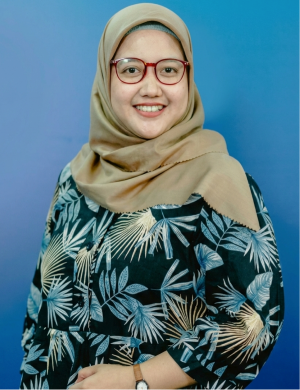
Putri Wuri
I am an English teacher and public education professional under the Ministry of Religious Affairs, Republic of Indonesia, with over a decade of experience supporting and leading students in diverse educational settings. I am currently pursuing a Master of Education at the University of Adelaide as an Australia Awards scholar, with academic interests in educational leadership, digital learning, curriculum development, and policy analysis. Beyond classroom teaching, I serve as a regional facilitator for teachers in Banten Province, supporting professional learning and instructional improvement initiatives. I have also worked as a reading literacy instructor and school visitor for the AKMI (Madrasah Competency Assessment), a national program under the Ministry of Religious Affairs aimed at strengthening literacy outcomes in Indonesian madrasahs. Through these roles, I have visited numerous madrasahs across Banten, including remote and under-resourced rural schools. These field experiences inform my research on student wellbeing, digital inclusion, and school leadership in marginalised educational contexts.